
Welcome to the Blog.
Emmy-winning TV host, podcaster and New York Times bestselling author, Keltie Knight, joins TODAY’s Jenna Bush Hager and Sheinelle Jones and opens up about the pressures of Hollywood, how she struggled with her appearance and self-esteem and where she is now in her journey of self-acceptance. "I'm still confused by it all," she says. Journalist Keltie Knight discusses the struggle with perfectionism and body image in the entertainment industry. Through candid insights into past medical procedures and the impact of social pressure, this conversation explores the ongoing path toward self-acceptance and redefining personal fulfillment beyond external achievements.
The Cutting Room Floor — Keltie Knight knows Hollywood. She’s a tenured, 3x Emmy Award-winning red carpet host and NYT bestselling author who's spent the last 15 years moving through the world of entertainment media, across legacy networks like Insider, Entertainment Tonight & E! In our conversation, Keltie breaks down the skills demanded of a great red carpet correspondent, how influencer culture & the race for virality is reshaping who gets to ask the questions, why the red carpet is a dying system, why hosts still struggle to be dressed by the biggest brands and how the 'dirty game' of publicity really works.

Want to Be an Entertainment Reporter? Here’s How to Get Started.
By Keltie Knight.
Breaking into entertainment reporting can feel intimidating, but there is no single, locked door. The industry rewards curiosity, persistence, and a genuine love of storytelling. Whether your dream is to cover red carpets, interview talent, or break industry news, here are the foundational steps that can help you get started.
First, start by understanding what the job actually entails. Entertainment reporting is not just glam. It requires research, fast turnaround times, accuracy, and strong interpersonal skills. You are expected to know pop culture, film, television, music, and the business behind them, often at the same time. Developing a sharp point of view and the ability to ask thoughtful questions is just as important as being camera-ready.
So, before you start worrying about platforms, focus on learning how to report. Practice writing clearly and concisely. Learn how to conduct interviews that go beyond surface-level questions. Study how stories are structured and how headlines are written. These fundamentals will carry you across mediums, whether you work in print, digital, broadcast, or social media.
Then, make your own luck! Many entertainment reporters begin by creating content on their own. Start a blog, a Substack, a TikTok series, or a podcast where you cover entertainment news, reviews, or interviews. Treat it like a professional outlet. Consistency matters. Editors and producers want to see proof that you can show up regularly and deliver polished work.
And of course, you’ll need to get comfortable on camera. If you want to work in broadcast or digital video, on-camera confidence is essential. Practice hosting segments, doing stand-ups, and breaking down news clearly and conversationally. Record yourself and then watch yourself back. Refine your delivery. Being natural on camera is a learned skill, not an innate one.
Once you have gotten the basics down, you’ll need to build out your professional network. Relationships are everything in entertainment journalism. Attend industry events, screenings, press days, and panels when possible. Reach out respectfully to reporters and producers you admire. Ask thoughtful questions, not for favors. Many careers begin because someone remembered a professional, prepared, and enthusiastic interaction.
Get your foot in the door where you can. Very few people begin at major networks or top publications right off the bat. Local outlets, digital startups, and niche entertainment sites are often the entry point. These roles provide real experience, clips, and credibility. Every assignment builds your résumé and sharpens your voice.
The entertainment landscape is constantly changing. Social platforms rise and fall, formats evolve, and audiences shift. The most successful reporters are adaptable and genuinely curious. Stay informed, keep learning, and remain open to new ways of telling stories.
Breaking into entertainment reporting takes time, but passion paired with preparation goes a long way. If you are willing to do the work, create consistently, and keep showing up, the path forward becomes much clearer.
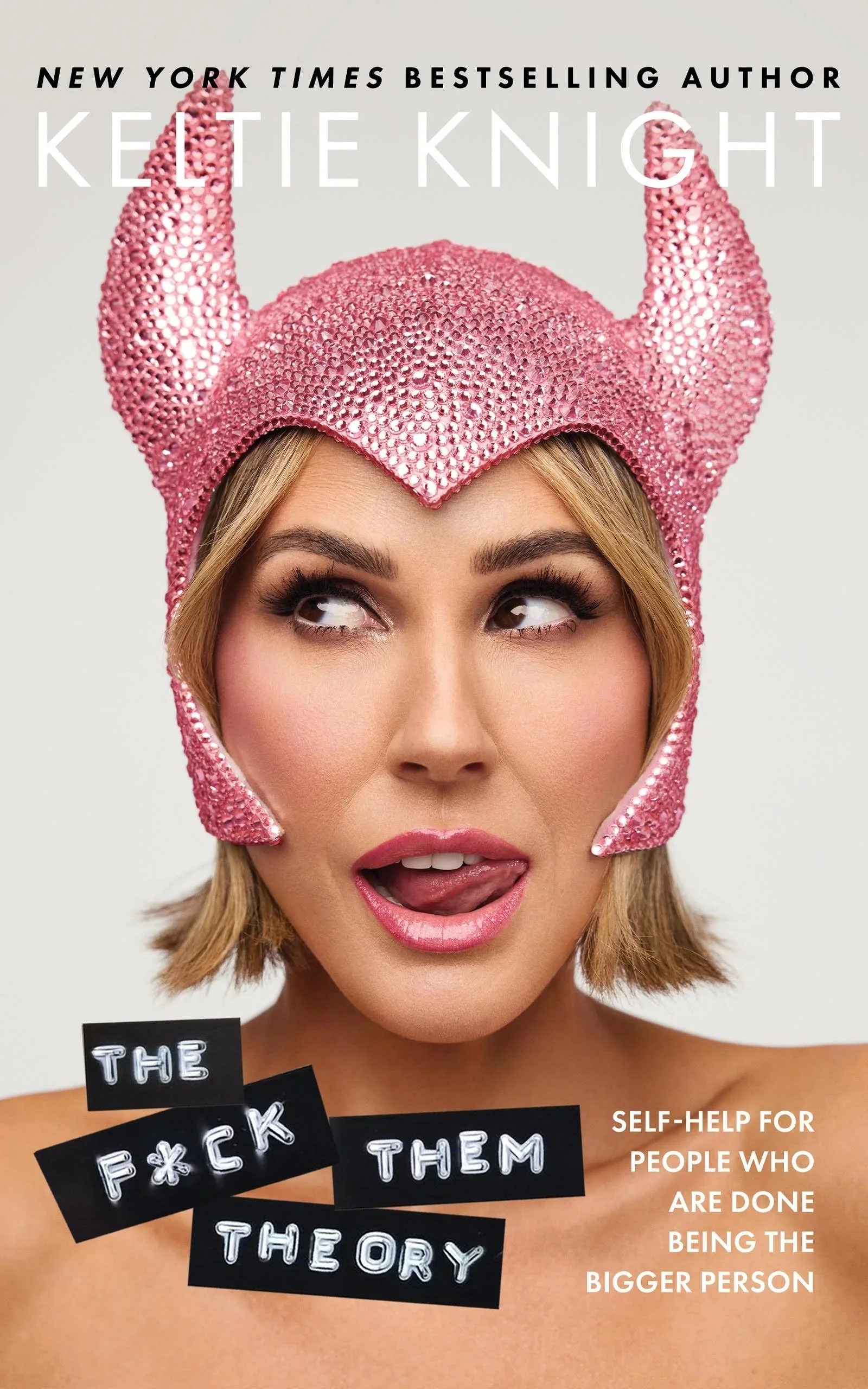
The F*CK Them Theory: Self-Help For People Who Are Done Being The Bigger Person
by Keltie Knight
There’s a quiet exhaustion that comes with always being “the bigger person.” You swallow your irritation. You forgive early. You let things slide because you don’t want conflict, you want peace, or you don’t want to lose someone. You rationalize. You minimize. You keep the peace at the expense of your own clarity, boundaries, and sometimes your dignity.
My new book, The F*CK Them Theory: Self Help For People Who Are Done Being The Bigger Person, is for the exact moment when the tolerance well runs dry. It’s for people who are tired of bending until they break, who want practical, unapologetic tools to call their own power back — without the guilt-tripping self-help fluff. If you read “the Let Them Theory” and didn’t feel seen, this book is for you. If you love self-help books this is for you. It’s also a great book I would recommend for women in business.
This is not a passive-aggressive guide to cruelty or a permission slip to cut people off for every small frustration. It’s a framework for recalibrating how you show up in relationships — personal, professional, and public — so you preserve your emotional bandwidth without becoming someone you don’t recognize.
It’s practical. You’ll get exercises, scripts, and decision-making models you can use instantly.
It’s honest. We’ll talk about shame, people-pleasing, codependency, the cultural pressure to always make peace, and the real consequences of saying “no” — both good and messy.
It’s permission-based. The core message: it’s okay to prioritize yourself. Saying “F*ck them” isn’t about hatred; it’s about refusing to be complicit in patterns that hurt you.
Boundaries are more than a sticky note on a fridge. The book teaches how to identify your limits, communicate them clearly, and enforce them consistently. You’ll learn to translate values into actionable rules for your life — and how to do this without getting stuck in over-explaining.
Every relationship has trade-offs. This tool helps you map the emotional ROI of people in your life. Who replenishes you? Who drains you? The F*CK Them Theory gives you a method to decide when staying in a dynamic is worth the cost and when it’s not.
The “micro-cut off” technique Not every relationship needs a nuclear option. The micro-cutoff lets you reduce contact, set a lower-maintenance cadence, or reframe expectations so your peace isn’t contingent on dramatic exits.
Reclaiming your time and attention Time is the most valuable non-renewable resource you have. The book shows how to protect it. You’ll get strategies for saying “no” with brevity and grace, managing social obligations, and creating a life that reflects your priorities rather than other people’s needs.
Emotional accountability without martyrdom You’ll learn how to take responsibility for your role in patterns without absorbing blame for other people’s choices. That means owning mistakes, apologizing when necessary, and still refusing to clean up the emotional debris of people who won’t change.
Scripts for real life What to say when someone invalidates you, gaslights you, drains you, or expects you always to make sacrifices. Short, direct phrases you can actually use — no performance required.
Why this matters now Mental health conversations have improved — people are more aware of trauma, boundaries, and self-care. But awareness doesn’t equal permission. Cultural messages like “be the bigger person” can be weaponized against people trying to heal. They can keep us stuck in patterns that protect other people’s comfort at the expense of our own growth.
The F*CK Them Theory recognizes that boundaries can be radical. Refusal to be the emotional laborer for someone else’s dysfunction is not selfish; it’s a survival strategy. For people juggling careers, relationships, parenting, and public lives, learning how to conserve emotional energy is essential.

How Hosting a Podcast Differs From Hosting a Red Carpet.
By Keltie Knight.
On the surface, hosting a podcast and hosting a red carpet might seem similar. Both involve interviews, storytelling, and connecting with an audience. In reality, they require very different skill sets, pacing, and mindsets. Understanding those differences is key for anyone looking to work across both formats.
Red carpet hosting is fast, reactive, and high-pressure. You are working against a clock, competing with noise, publicists, photographers, and live broadcasts. Questions must be sharp and efficient, and you often have only seconds to get what you need. You also don’t have time to redo an interview, or edit the content of your interview in post-production, so in that sense, it can be a lot higher pressure.
Podcast hosting is the opposite. It allows space. Conversations unfold naturally, pauses are acceptable, and depth is encouraged. Instead of racing the clock, you are guiding a longer narrative and letting the guest reveal more of themselves over time.
For a red carpet, preparation means knowing just enough about many people. You need quick context, current projects, and timely angles. Flexibility is essential because guests change, schedules shift, and interviews are often unpredictable.
Podcast preparation goes deeper. You are usually focused on one guest or topic per episode. Research is more extensive, and questions are designed to build on each other. The goal is not a soundbite but a complete conversation.
Red carpet hosting is a bit of a performance. Your energy must be high, delivery crisp, and presence confident. You are part of the spectacle and often speaking to a large audience in real time.
Podcast hosting is intimate. The tone is conversational and relaxed. Listeners feel like they are sitting in on a private discussion. Authenticity matters more than polish, and the best moments often come when the host listens rather than speaks.
On a red carpet, you control very little. Lighting, sound, interruptions, and timing are all outside your hands. You adapt quickly or you miss the moment.
With a podcast, you control almost everything. The setting, the pacing, the edits, and the final story all live in your hands. This allows for creativity, reflection, and refinement that simply is not possible on a live carpet.
Success on a red carpet is about clarity, efficiency, and impact. Did you get the quote. Did you keep it moving. Did the audience get what they needed in a short window.
Podcast success is about connection. Did the listener stay engaged. Did they learn something new. Did the conversation feel honest and compelling enough to keep them coming back.
Both formats are valuable, and mastering each requires intention and practice. Hosting a red carpet sharpens your instincts and confidence. Hosting a podcast strengthens your voice and storytelling. Together, they create a well-rounded host who can thrive in any entertainment setting.

Red Carpet Makeup vs. Everyday Makeup: What’s the Difference?
By Keltie Knight.
If you watch red carpet coverage regularly, you have probably noticed how dramatically different celebrity makeup looks compared to what most people wear day to day. As an entertainment news host, Keltie Knight spends a great deal of time covering red carpet events, interviewing celebrities, and seeing firsthand how beauty is approached for major moments versus real life.
So what exactly separates red carpet makeup from everyday makeup?
Red carpet makeup is designed with cameras in mind. Bright lights, flash photography, and high-definition video can wash out features, which means makeup has to work harder to show up correctly on screen. Contour is more sculpted, blush is more pronounced, and eye makeup is often bolder than it might appear in person.
This style of makeup is meant to create impact. It is not necessarily about subtlety, but about balance and structure so the face photographs beautifully from every angle.
Everyday makeup is built for natural light and close interactions. It is meant to enhance rather than transform. Lighter coverage, softer definition, and breathable formulas help makeup look fresh instead of heavy when seen up close.
While red carpet makeup is applied for longevity and visibility, everyday makeup prioritizes comfort, movement, and ease. It should feel like an extension of your skin rather than a mask.
One of the biggest misconceptions is assuming red carpet makeup is meant to look natural in person. Often, what appears flawless on camera can look intense off-camera. Strong contour, layered foundation, and dramatic lashes are intentional choices that compensate for lighting and distance.
This is why copying a celebrity red carpet look exactly may not always translate well to daily wear.
For those inspired by red carpet beauty, the best approach is to adapt techniques rather than replicate them. Borrow the polished skin prep, thoughtful color placement, or elevated lip choices, but scale them back for daytime environments.
Understanding the difference between these two styles helps set realistic expectations and allows makeup to feel intentional for the occasion.
Whether watching awards season coverage or following red carpet interviews with hosts like Keltie Knight, it becomes clear that makeup is a tool designed to serve the moment. The key is knowing when to turn up the drama and when to let simplicity shine.

Working with Friends, Tips for Making it Last
By Keltie Knight.
Working with friends can be incredibly rewarding. There is built-in trust, shared values, and often an unspoken understanding that makes collaboration feel natural. At the same time, blending friendship and work comes with challenges that require intention, communication, and clear boundaries to succeed long term.
Before working together, talk openly about roles, responsibilities, and goals. Clarify who is responsible for what and how decisions will be made. Having these conversations early helps prevent resentment and confusion later.
Avoid assuming your friend knows what you are thinking. Professional honesty is essential, even when it feels uncomfortable. Address issues as they arise rather than letting them build. Clear communication protects both the work and the relationship.
Friendship does not replace professional skill. Trust each other’s strengths and allow space for different working styles. Respecting expertise keeps collaboration productive and avoids power struggles.
Make room for friendship outside of work. Constantly talking about projects can blur lines and create tension. Setting boundaries allows the relationship to remain personal, not purely transactional.
Disagreements are inevitable. When they happen, approach them as business discussions, not personal conflicts. Focus on solutions rather than blame, and remember that preserving the relationship is just as important as resolving the issue.
Not every partnership is meant to last forever. Regular check-ins help assess whether the collaboration is still serving both parties. Recognizing when to adjust or step away can be a sign of respect, not failure.
Working with friends can deepen relationships when done thoughtfully. With clear boundaries, mutual respect, and open communication, it is possible to build something meaningful without sacrificing the friendship that started it all.